

AlMg3 (EN AW-5754) aluminum sheet is the most widely used medium-strength aluminum-magnesium rust-proof alloy in the European standard system, and is also the designated general-purpose rust-proof aluminum material in European industrial manufacturing, automotive, and shipbuilding sectors. Contrary to the 5052 aluminum sheet, 5754 aluminum sheet optimizes weldability and forming toughness through precise control of the magnesium content range, making it a rust-proof aluminum category specifically suited for welded structural applications. Based on our years of experience exporting to the European market, EU customers have a much higher acceptance of AlMg3 EN AW 5754 than other 5000 series aluminum grades. The core reason is its low sensitivity to weld cracks and high joint strength retention rate, perfectly meeting the mass production needs of automated welding in European industry.
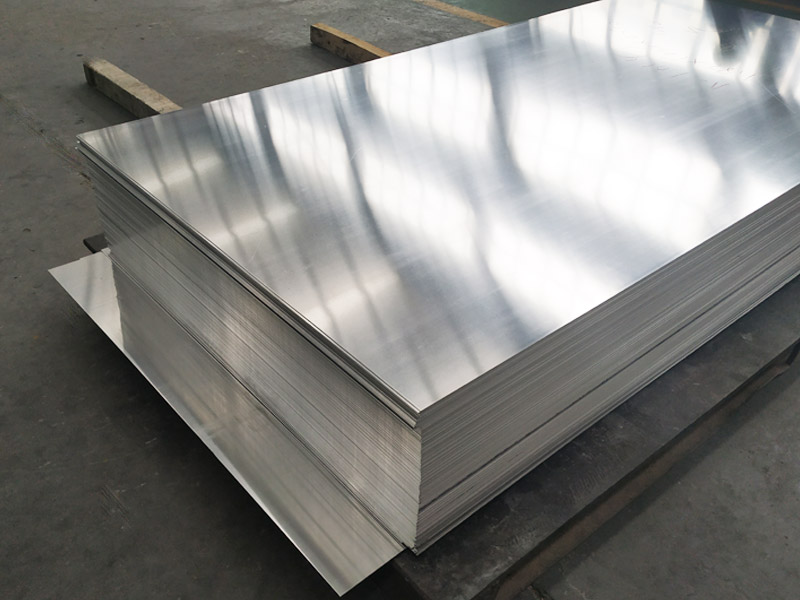
The precise alloy composition system is the underlying logic of performance advantages. According to EN 573-1 standard, the core components of AlMg3 are 2.6%~3.6% magnesium, 0.1%~0.6% manganese, and 0.05%~0.2% chromium, with the balance being pure aluminum. Compared to aluminum alloy 5052, its upper limit for magnesium content is reduced by approximately 1.3 percentage points, retaining the natural atmospheric corrosion resistance and salt spray resistance of aluminum-magnesium alloys while effectively reducing the tendency for hot cracking during welding of high-magnesium alloys. Manganese and chromium work synergistically to refine the grain structure, improving the material's resistance to stress corrosion cracking and its forming toughness. The product is manufactured using a standard process of hot rolling, cold rolling with controlled thickness, and controlled atmosphere annealing, with overall compositional segregation controlled within 0.2%, ensuring stable performance uniformity.
Standardized mechanical properties and dimensional accuracy meet the stringent selection requirements of European industry. According to EN 485 standard, common delivery tempers of 5754 aluminum sheet include O temper (fully annealed), H24 (semi-hardened), and H111 (lightly work-hardened after annealing). Taking standard 1.0~3.0mm thick ENAW 5754 aluminum plates as an example, the tensile strength in the O temper is 190~240MPa, with a specified non-proportional elongation strength ≥100MPa and elongation after fracture ≥20%, suitable for complex bending and stretching. The H24 semi-hard temper tensile strength is 240~290MPa, with a specified non-proportional elongation strength ≥190MPa and elongation after fracture ≥8%, balancing stiffness and formability. Dimensional accuracy conforms to EN 485-4 standards, with thickness tolerance controlled within ±0.06mm and plate flatness ≤0.3mm/m, allowing direct integration into automated welding production lines.
Excellent weldability is the core differentiating advantage of AlMg3 aluminum 5754 compared to similar rust-resistant aluminum alloys, and is key to its inclusion in European standards. This alloy exhibits significantly lower weld crack sensitivity than high-magnesium 5000 series aluminum alloys, supporting various welding processes such as TIG, MIG, and laser welding. The weld joint strength retention rate can reach over 85%, and the weld corrosion resistance is essentially the same as the base metal, requiring no additional post-weld anti-corrosion treatment. Many of our European automotive and sheet metal clients, who previously tried using aluminum sheet 5052 as a substitute for 5754 aluminum sheet, experienced a 4% to 6% increase in weld cracking rate during automated welding mass production. Ultimately, they reverted to specifying the 5754 grade. While the alloy costs appeared similar, the difference in mass production yield resulted in a far greater overall cost gap than expected.
Based on its performance characteristics, AlMg3 aluminum sheets have formed clear core applications. The automotive manufacturing sector is its largest application scenario, with major European automakers listing it as a standard material for body structural components, fuel tanks, and chassis skid plates, balancing lightweight design with weldability for mass production. In the marine and ocean engineering sector, it is used for hull bulkheads and pipeline supports, offering resistance to seawater corrosion and stable weldability. In the construction sector, it is used for curtain wall systems and window and door structures, meeting EU building material standards. In the chemical and food processing sectors, it is used for tanks and pipelines, being non-toxic, corrosion-resistant, and easy to clean.
Haomei Aluminum supplies AlMg3 EN AW 5754 aluminum sheets manufactured strictly according to EN standards, covering the full thickness range from 0.5mm to 20mm. Customization in all conditions is supported, and each batch comes with EN 10204 3.1B material certification and complete export customs clearance documents, directly meeting EU market access requirements. We provide global customers with high-quality, rust-resistant aluminum materials that comply with European standards.
About Us
| News
| Products
| Download
| Contact Us
Haomei Aluminum is a large-scale listed company in China, which is engaged in the processing of aluminum sheet, aluminum coil, aluminum strip, aluminum circle and aluminum foil. With an annual capacity of 200,000 tons, Haomei Aluminum provides varieties of aluminum products to more than 30 countries in the world.
Address: No.14 Waihuan Road, New district, Zhengzhou, China.


