

Mill finish aluminum coil, commonly known in the industry as original factory bright aluminum coil. It refers to basic aluminum coils that have undergone hot and cold rolling production lines, without any secondary surface modification treatments such as polishing, coating, anodizing or brushing. They are directly annealed and slit for shipment. It is the most basic billet category in the aluminum product industry chain and also the base material product with the highest shipment volume in global aluminum exports.
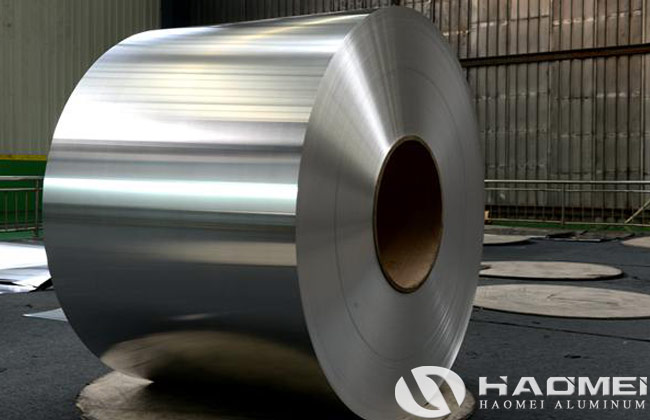
From a production process perspective, the mill finish is the original surface naturally formed on the aluminum billet during the roll forming process in the cold rolling mill. Aluminum ingots are hot-rolled into aluminum billets, which are then gradually rolled to the target thickness through multiple cold rolling mills. After the finished product is rolled, only stress-relieving annealing is performed; there are no additional surface finishing processes. The aluminum material naturally forms a dense alumina film with a thickness of 0.02μm~0.1μm in the air environment. This original oxide film is the natural protective layer of the mill finish aluminum coil, distinct from the thickened oxide layer formed by artificial anodizing. Fine, unidirectional rolling marks and trace amounts of rolling oil residue left from the rolling process are inherent characteristics of this product and are considered normal and compliant with industry standards.
In terms of appearance and physical and chemical properties, mill finish aluminum coils have a natural matte silver-white finish without any mirror-like reflection. The surface is uniformly covered with fine rolling marks. The material's mechanical, electrical, and thermal conductivity parameters are completely preserved from the original rolling specifications, and there will be no change in material properties due to surface modification. The mainstream grades on the market are concentrated in three categories: 1060, 3003, and 5052. Different alloy ratios only change the strength and corrosion resistance of the base material. The surface condition uniformly follows the Mill Finish standard. Product acceptance refers to the ASTM B209 international aluminum specification; shallow rolling marks are compliant, while penetrating scratches and dents are considered defects.
The product characteristics determine its application scope. The core advantage of mill finish aluminum coils lies in their low production cost, saving on subsequent surface processing costs, and the excellent adhesion of the original aluminum surface, making it the optimal base material for color coating, spraying, and baking paint deep processing. The main drawback is the limited protective ability of the original oxide film. Prolonged exposure to the open air will cause slow oxidation and dulling, making it unsuitable for direct outdoor decorative applications. Currently, its main uses fall into two categories: first, as a raw material for deep processing, the vast majority of color coated aluminum coil and film-coated aluminum coils use this type of material; second, for direct industrial processing, primarily used in HVAC insulation, heat exchanger fins, equipment casing stamping, pipe linings, and other indoor industrial components.
Based on years of export experience, common misconceptions arise in foreign trade procurement. Many overseas buyers confuse mill finish with mirror finish aluminum coils. Mirror finish aluminum requires additional polishing and grinding processes, resulting in a significantly higher purchase price than mill finish aluminum coils. From a cost perspective, the price per pound of mill finish aluminum coils of the same specifications is generally 0.28~0.45 USD/lb lower than that of color coated aluminum coils. Selecting the appropriate type based on needs is key to price control. For applications requiring only subsequent surface finishing, prioritize purchasing mill finish aluminum coils; for outdoor use, pre-order finished surface-treated products.
In summary, mill finish aluminum coils, as the primary base material for deep aluminum processing, remain a staple in aluminum coil procurement due to their high adaptability and cost-effectiveness, and are an indispensable basic raw material for the entire aluminum processing industry chain.
About Us
| News
| Products
| Download
| Contact Us
Haomei Aluminum is a large-scale listed company in China, which is engaged in the processing of aluminum sheet, aluminum coil, aluminum strip, aluminum circle and aluminum foil. With an annual capacity of 200,000 tons, Haomei Aluminum provides varieties of aluminum products to more than 30 countries in the world.
Address: No.14 Waihuan Road, New district, Zhengzhou, China.


