

Industrial aluminium sheets are functional aluminum materials specifically developed for industrial production and precision manufacturing. Distinguished from decorative aluminum sheets, they are a core material in equipment manufacturing, heavy engineering, new energy, and general industrial fields. This kind of aluminum sheets use high-purity aluminum as the base material, combined with alloying elements such as magnesium, manganese, silicon, and zinc. They are formed through precision processes such as hot rolling, cold rolling, and heat treatment. Abandoning the decorative attributes of civilian aluminum sheets, they focus on four core properties: high strength, high stability, ease of processing, and resistance to various harsh industrial production environments. They are currently the most in-demand and widely used industrial consumable in the global aluminum import and export trade.
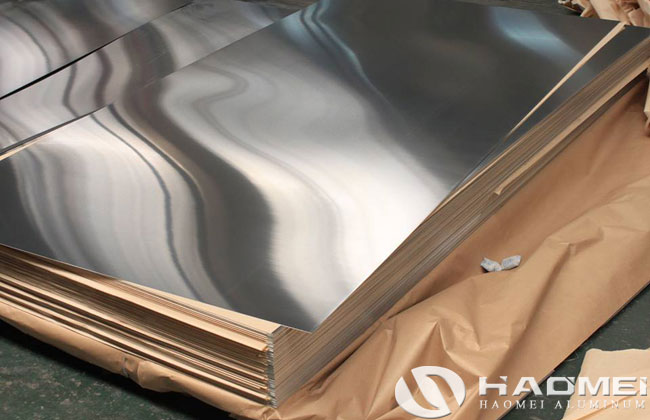
Industrial aluminium sheets possess excellent comprehensive physical properties suitable for industrial production, with core advantages far exceeding those of ordinary aluminum materials. Their most significant characteristic is lightweight, with a density only one-third that of steel, effectively reducing equipment weight and transportation load. They also possess excellent thermal conductivity, electrical conductivity, and ductility, supporting a full range of deep processing techniques such as bending, stamping, welding, and cutting, making them suitable for automated production lines. After specialized processing, the aluminium sheet material exhibits significantly improved resistance to oxidation, acids and alkalis, and rust. It can withstand complex working conditions such as high temperatures, humidity, outdoor environments, and chemical corrosion for extended periods, resisting deformation, cracking, and aging. Its stability and service life fully meet industrial mass production standards.
Industrial aluminium sheet alloy systems are clearly categorized, allowing for precise matching to the needs of different industrial sub-sectors. The mainstream industrial aluminium sheets on the market are divided into four practical alloy series, each with its own specific application:
1000 series pure aluminum sheets offer high purity and excellent thermal conductivity, primarily used in general industrial applications such as heat dissipation equipment, electrical cabinets, and chemical linings;
3003 aluminum-manganese alloy boasts outstanding rust resistance, making it the standard material for fan equipment, industrial tanks, and pipe linings;
5052/5083 aluminum-magnesium alloys offer high strength and top-tier corrosion resistance, widely used in shipbuilding, heavy machinery, and outdoor engineering equipment;
6061/6063 aluminum-magnesium-silicon alloys offer excellent balance, suitable for industrial frames, automated equipment, and precision tooling components.
A comprehensive specification system and standardized production ensure the versatility and adaptability of industrial aluminum sheets. Industrial aluminium sheets cover the full thickness range, including 0.2-3mm precision thin sheets, 3-12mm standard medium sheets, and 12mm and above thick medium-thick sheets, while also supporting various forms such as coils, cut-to-length sheets, and slit sheets. All sheet dimensions, flatness, and mechanical properties strictly adhere to national standard GB/T3880, American standard ASTM, and European standard EN international standards. The aluminium sheets are free of pores, sand holes, and scratches, and the material is dense and uniform, fully adaptable to various industrial production, processing and assembly needs.
A stringent industrial-grade quality control system is the core competitiveness of high-quality industrial aluminum sheets. Regular industrial grade aluminum sheets undergo four levels of testing before leaving the factory: chemical composition testing, mechanical property testing, flatness flaw detection, and visual inspection, ensuring stable batch performance and high consistency. Compared to ordinary aluminum sheets, industrial aluminium sheet products have stronger fatigue resistance and deformation resistance, and lower processing loss rates, effectively reducing enterprise production costs.
As a professional aluminium sheet supplier, we provide a full range of industrial aluminium sheets with complete quality inspection reports and export qualifications, adapting to access standards in multiple regions around the world, and providing industrial customers with stable, cost-effective, one-stop aluminum supply solutions.
About Us
| News
| Products
| Download
| Contact Us
Haomei Aluminum is a large-scale listed company in China, which is engaged in the processing of aluminum sheet, aluminum coil, aluminum strip, aluminum circle and aluminum foil. With an annual capacity of 200,000 tons, Haomei Aluminum provides varieties of aluminum products to more than 30 countries in the world.
Address: No.14 Waihuan Road, New district, Zhengzhou, China.


