

Both aluminum 5052 and 3003 belong to the corrosion-resistant aluminum alloy family and serve as mainstream base materials for sheet metal bending. Differences in their compositional design, mechanical properties, and corrosion resistance directly dictate the bending processes and service conditions for which they are best suited.
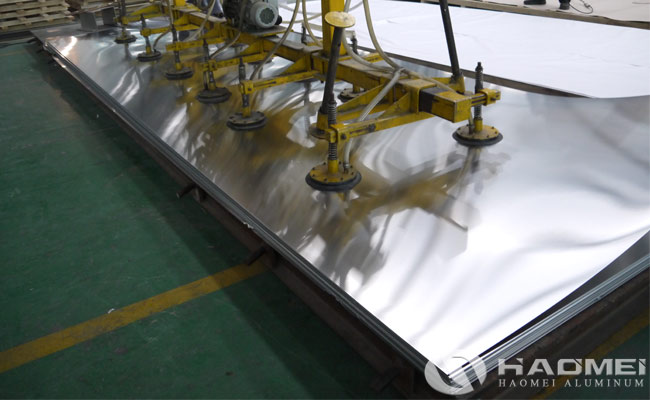
At the fundamental alloy level, the difference of 5052 and 3003 bending performance stems from distinct strengthening mechanisms associated with their alloying elements. Aluminum 3003 is an Al-Mn alloy with a manganese content of 1.0%–1.5%; it achieves mild strengthening primarily through dispersed precipitates, exhibits a moderate work-hardening rate, recovers plasticity well after annealing, and offers low forming resistance. Aluminum 5052 is an Al-Mg alloy with a magnesium content of 2.2%–2.8%; it relies mainly on solid-solution strengthening, resulting in significant strengthening and a faster work-hardening rate—meaning strength increases more sharply for a given amount of deformation—though it retains less plastic reserve. Bending performance hinges on a material's capacity for plastic deformation and its sensitivity to work hardening; in the same delivery state, aluminum 3003 possesses superior baseline plasticity, whereas aluminum 5052 offers higher baseline strength.
Using standard aluminum sheets with thicknesses of 1.0–3.0 mm as a benchmark, the two alloys exhibit distinct differences in key bending performance parameters. In the fully annealed (O-temper) state, 3003-O demonstrates an elongation after fracture of ≥32%, a minimum bending radius of 0.5 times the sheet thickness for a 90° cold bend, and a single-pass springback angle of ≤2°; it offers the highest forming limit and is resistant to bending cracks. In contrast, 5052-O shows an elongation after fracture of ≥22%, a minimum bending radius of approximately 1.0 times the sheet thickness, and a springback angle of ≤3°; while its forming limit is slightly lower, the finished part possesses higher strength after bending. In the semi-hard (stabilized) temper condition, 3003-H24 exhibits an elongation after fracture of ≥10% and a minimum bending radius of 1.5 times the sheet thickness. In contrast, 5052-H32 shows an elongation after fracture of ≥12%; however, due to its faster work-hardening rate, it requires a minimum bending radius of 2.0 times the sheet thickness. Additionally, its overall springback is 30%–40% higher than that of 3003, necessitating greater precision in bend angle compensation.
Material selection logic differs based on the specific bending scenario. For complex bending involving significant deformation—such as multi-stage continuous bending, roll bending, or large-angle tubular parts—3003-O (annealed) material is the preferred choice. Its high ductility and slow work-hardening rate allow for the elimination of intermediate annealing steps, resulting in stable mass-production yields and superior processing efficiency. For standard, simple bending applications—such as equipment housings or electrical cabinet sheet metal—both materials meet forming requirements. If there are no specific strength requirements for the finished product, 3003-H24 is chosen to control material costs; conversely, if the product requires dent and deformation resistance, 5052-H32 increases rigidity by over 40%, potentially eliminating the need for additional stiffening ribs. For bent parts used in outdoor, corrosion-prone environments—such as coastal architectural components or outdoor equipment enclosures—the 5052 series is prioritized. It offers over 40% better salt-spray corrosion resistance than the 3003 series, requires no additional anti-corrosion treatment after bending, and ensures greater long-term service stability.
Years of experience working with overseas sheet metal clients reveal a common pitfall: the assumption that "higher ductility is always better." In reality, the ultimate goal is to deliver a compliant finished product, requiring a comprehensive assessment of forming difficulty, structural requirements, and the operating environment. Some factories substitute aluminum 5052 with 3003 to reduce material costs for load-bearing bent parts, only to face deformation and rework due to insufficient strength—ultimately driving total costs up by more than 15%. Conversely, blindly selecting 5052 for simple bending tasks increases forming difficulty and material costs, resulting in "over-engineering" regarding performance.
Overall, 3003 aluminum alloy is better suited for bending applications where ease of forming is the primary consideration and strength requirements are moderate, offering distinct advantages in cost and yield. In contrast, 5052 alloy is better suited for scenarios requiring a balance of formability, finished-product strength, and corrosion resistance, delivering superior performance over the entire lifecycle. Precisely matching the material to the specific process and operating conditions is essential to achieving the optimal balance between processing efficiency and functional value.
About Us
| News
| Products
| Download
| Contact Us
Haomei Aluminum is a large-scale listed company in China, which is engaged in the processing of aluminum sheet, aluminum coil, aluminum strip, aluminum circle and aluminum foil. With an annual capacity of 200,000 tons, Haomei Aluminum provides varieties of aluminum products to more than 30 countries in the world.
Address: No.14 Waihuan Road, New district, Zhengzhou, China.


